Appearance: Somewhere between dark gold and copper. Head is good, but could be a little more. It helps to give a little foam squirt on top of these for good measure.
Smell: Very faint esters from the yeast (banana and clove), and the faintess is due to the lower fermentation temps in the cool box (no warmer than 72, but usually below 69).
Taste: Yeast notes start and then are followed by a malty finish that was not in my last hefewizen. I attribute this note to the use of Weyermans Abbey Malt in the place of Pilsner since Blockader was out (the truck with the Pilsner malt rolled up as I was picking up my grain bag to leave). I like the finish on this beer since the last hefe I brewed with Pilsner malt since that one seemed very empty in the finish, and that was the one knock on it. Both are low-gravity beers (1.045-6) and having the help of the Abbey Malt improved that. In short, I will do this again.
Mouthfeel -- Carbontated well and light - bodied.
Overall -- I was originally disappointed at the o.g. of this beer, but I have come to be glad of it. I need to make more session beers, especially for the summer.
Spices: 1 oz Bitter Orange Peel (5 min) 2 oz crushed Indian Coriander seeds (5 min) 1 oz Bitter Orange Peel (Flameout) 2 Chamomile Tea Bags (Flameout)
The Mash: 4 Gallons Strike water (Protein Rest Infusion) -- 122 degrees -- 30 min 2.88 Gallon infusion (sacc rest) -- 154 degrees -- 60 min 2.64 gallon infusion (mash out) -- 168 degrees -- 10 min
Total Mash Water -- 9.52 gallons 2.65 gallons absorbed 5.63 gallons of sparge water to make a total of 12.5 preboil (slightly less than normal due to slower boil for witbier)
Brewday Notes:
6.6.11
Things went very well until I forgot to sanitize the pump. This probably happened since I forgot to use my hop screen earlier. having to go old school with the immersion chiller first round of oranges and all the coriander boiled for five minutes and then removed and put aside. Pump boiled for ten extra minutes. Second round of oranges and the tea added along with the previously steeped at flame out. 1.054 at 90 degrees
The Yeast
Each will get about a half gallon starter of Wyeast 1214 collected from Belgian Summer Ale.
Notes:
6.7.11 -- Pitched yeast 6.13.11 -- Gravity reads 1.018 (sleeping bag cool box) I stopped switching the ice out last night to allow the fermentation to warm a little.
6.24.11 -- Gravity 1.014 -- 76% attenuated. I expected a little more by now. I am going to let it go more since it has not been two weeks yet. Sample tastes nice.
6.30.11 -- Gravity stable at 1.014 (laundry room fermenter; I have not checked the hall one. It will be interesting to see if there are any differences). Will keg soon. Edit: hall version exactly the same. 7.14.11 -- TASTING MEG WIT: Appearance: Very appropriate for a Wit -- a hazy straw yellow that shows off the whiteness of its namesake. Head starts fluffy and then settles down to a lace. Smell: First scents are of yeasty esters and phenols, but grain and orange/coriander are also perceptible. Taste: A nice blend of yeast, sourness, and spice. This is not as clean tasting as other wits, nor is it as spicy. I was going for a more historic example, and I think this fits. The yeast flavor goes well with the spices and makes for a peppery sensation while the chamomile works well with the unmalted grains to lay down a nice bass note. A slight hop bitterness in the beginning, but then it yields to the orange, coriander, and chamomile. Others in A.L.E.Z. detected a rubbery flavor, but I honestly cannot find it. I have entered this beer in a competition in Jacksonville, FL, and I am interested to see if the judges have the same thing to say. Mouthfeel: The unmalted grain lends to the mouthfeel well here. The beer is not heavy, but there is a velvety quality to it. Carbonation adds well to this, and also helps showcase the spicy flavors. Overall: I think I have done well here. As I alluded to earlier, I am a fan of the rustic nature of this beer, and the concerns about the amount of acidulated malt I used have been all but assuaged. Like I also said earlier, if I were to make another witbier, I would not make changes. I am happy with this one, and I am anxious to see if the certified judges have similar sentiments.
This was originally going to be another batch of El Jefe, but Blockader was out of Pilsener malt. I substituted something new, Abbey malt in its place:
Reflections on Brewday: My efficiency sucks 66%. I don't know if it is the fact that I am using wheat (I remembered the rice hulls this time even), or something else I am doing. Everything else went great. The scrubby was really slowing me down; I think I saved at least 90 minutes taking it off.
Paterweizen Notes:
5.29.11 -- Gravity at 1.013 -- kegged
Belgian Summer Ale Notes:
5.29.11 -- Gravity at 1.011 -- Racked into secondary with culture of Brett B and 1 oz medium toast French oak chips
7.7.11 -- Gravity down to 1.009. Seems to have a little way to go, though the Brett flavor as well as the wood is starting to show through.
9.26.11 - 1.005 wood and Brett are tasting good. Will check again I. A few weeks to see if it is stable.
10.18.11 -- reading 1.006 - 1.007. I can't imagine it going up, so I am calling this stable and ready to bottle. Brett aroma is really there. The beer is really dried out, and maybe a bit thin. Wood flavor is nice, but one-dementional (I am going to start using cubes.). Overall this is going to be a good summer beer.
Amber Beaver -- 19 IBU 1.058 -- 1.015 -- 5.6% ABV
Wynona's Big Brown Beaver -- 39 IBU 1.060 -- 1.013 -- 6.2% ABV
84% efficiency
The Malts:
11 lbs Pilsner
10 lbs Munich II
The Hops:
2 oz Hallertauer (3.8% AA) 60 minutes
2oz Hallertauer (3.8 % AA) 15 minutes
Mini Mash for Wynona's Big Brown Beaver:
1.5 lbs Marris Otter
1.5 lbs 60L Crystal
1oz Simcoe (14.1% AA) 15 minutes
21 pound grain / 2quarts a pound = 10.5 gallons strike water
2.6 gallons absorption 5 gallons sparge water
1. Main mash
2. Mini mash. (one gallon) (1.5 lbs Maris Otter, 1.5 lbs 60L Crystal)
3. Main mash-out decoction
4. Heat sparge water (main mash)
5. Sparge main .
6. Heat sparge water for mini-mash (half gallon)
7. Put mesh bag in sparge water mini-mash or pour over bag
---------------
Main boil: 2oz Halertaur 60 2oz Halertaur 15 + whirlflocx2
-------------
Mini boil: 1oz Simcoe (14% AA) 15 minutes
Reflections: Things went pretty well with the exception of a clog in the chiller -- I think it is the scrubby, and I will eschew it next time. had to syphon the last four gallons or so out, and it was only down around 100. Letting it chill in chest freezer and cool box overnight. It was still too warm to pitch in the morning (about 75 on the ale, and about 65 on the lager), so it is still sitting, which worries me about DMS (Palmer suggests it should not be a worry lower than 80 degrees). I think the wort was around 90 when I brought it in. I imagine everything should be fine, but if this one has "that homebrew taste" I'll know why.
Dirty Blonde: O.G. 1.045 -- F.G. 1.009 -- 4.7% ABV Silver Medal - Sour Ales - 2013 Peach State Brew-Off
Half of this batch will be the traditional Hefeweizen with the substitution of some Vienna in place of the Pilsner I would normally use. The other half will be fermented with Wyeast 1214 (Chimay) and then dosed with dregs from several sour/bretty beers. I may decide to add the dregs along with the primary strain, but that will all depend on how my bug bitch colony smells on brew day. The first whiff I got after adding my first dregs (Jolly Pumpkin Weizen Bam) was a bit vinegary. If that continues to be the case, I will dump it and start over.
The Malts:
10 lbs Wheat malt
5 lbs Vienna malt
4 lbs Pilsener Malt
The Hops:
2 oz Hallertauer (3.9%AA -- 60 minutes)
The Yeast:
El Jeffe Weizen -- Weinhenstephaner Hefeweizen
Blonde to be Named Later -- Wyeast 1214 plus other bugs and brett (and wood later)
The Mash: Here's the plan: Initial protein rest will be at 122 degrees. After twenty minutes, I will pull a large (nearly half of the mash) decoction and heat it to 155. I will hold it there with a lid and a sleeping bag for about fifteen minutes before bringing to a boil. At that point I will add the decoction to the main mash until the saccrification temperature of 146. This rest will be held for one hour, and then another smaller decoction will be pulled and boiled to bring the mash to mash-out temperature (around 170). Strike water (2qt per pound) = 9.5 gallons + a little less than a half gallon added to the first decoction to account for additional boil-off Absorbtion = 2.37 gallons Sparge water = 5.87 gallons
Brewday Notes: First decoction got too hot (around 164) but I managed to cool it down to around 155 with water and stirring. Resting in sleeping bG for ten minutes I returned enough to the tun to get the temp up to 146, but had a remainder of about two gallons which did not cool quick enough to add back until there was only about three minutes left in the hour rest
Reflections on Brewday: With an O.G. of 1.045, I am going to say efficiency sucked again (69%). I imagine I did not boil as hard as I did last time, and it is hard to see if the double decoction did anything for efficiency. If I get 75% attenuation out of the hefeweizen yeast, I am looking at a 4.5% ABV beer (not terrible). (later-- the morning after): I have come to decide that the issue was with lautering. I forgot to add rice hulls to the grist, which I did not think would be an issue since I was going to use the double decoction, but I could tell that the lauter did not work completely when I opened the tun and saw some wort still floating on the top of the bed. Efficiency was not terrible, but I think I know were the other five points went -- into the compost heap.
3.20.11 -- Pitched yeast into both beers
El Jefe Weizen Notes:
3.29.11 -- down to 1.011 4.45% ABV 76% attenuated. Kegged
4.2.11 -- Drinking (initial reviews are good).
Sour / Funky Blonde Notes:
3.26.11 -- dirty blonde down to 1.011. Racking into secondary to add bugs. Bugs propagated from bottles of Jolly Pumpkin Weizen Bam and Oro de Calabaza, and Oud Beersel Oud Kriek 3.27.11 added dregs from one bottle Orval 5.29.11 -- Added 1 oz medium toast French oak chips. 7.20.11 -- Gravity 1.009. Sourness is very pleasant and much more complex than when I used a quick souring method (Pigpen). I am still going to leave this alone for a while since I believe the oak, which I added late, still needs time to make its contribution. Overall I am very encouraged by this sample. 9.30.11 -- Gravity stable at 1.009. Bottled at 4 volumes.
Nasferatu -- 24 IBU -- 1.055Black Hearted -- 69 IBU -- 1.062
It has been a long while since I brewed last, and half of that batch got dumped because of an infection. The lager chest is completely empty, and I see a homebrew shortage in the future. This is the first batch I am making with my new plate chiller, hop bag filter, fermcap, and dip tube assembly I attached to the kettle.
.
The Malts: 10 lbs Munich II 9 lbs Pilsener 1 lb Carafa III (an additional pound in sparge) 1 lb Carapils
.
The Hops (main boil) 2 oz Hallertauer (3.9% AA) -- 90 minutes 2 oz Hallertauer (3.9% AA) -- 15 minutes + Whirlfloc tabs
.
Black Hearted Additions (added to about a gallon of wort): 2 lbs 80L Crystal 2 lbs 120L Crystal Black Hearted Hops 2 oz Centennial ( 8.8% AA) -- 20 minutes 1 oz Centennial (8.8% AA) -- 10 minutes 2 oz Centennial (8.8% AA) -- Dry
.
Brewday Notes: 10.( gallons strike water 5.25 gallons sparge water plus 1.5 quarts deadspace = 5.63 gallons Temp just right at 150 after fifteen minutes, and then again at 70 minutes. Temp after first decoction ( about three gallons ): 170 Dip tube a scruby clogging. 1.055 at 70 degrees. BH: 1.061 at 69 degrees.
.
Reflections on Brewday: Things went very smoothly considering the upgrades until I had a nasty clog when it came time to clean the pump/chiller. That added two hours to the experience. It would have been my fastest brewday otherwise. I only ended up with about nine gallons of beer, and that may be due to dividing them unequally. There is plenty to be encouraged by for the next time. I need to be sure to tighten up the hop bag since it fell off.
.
2.27.11 -- Pitched yeast into both beers.
.
Nasferatu Notes:
3.11.11: 1.021 diacetyl rest begun
3.15.11: still around 1.020. I am going to let it stay at room temperature until I return from our camping trip
3.19.11 -- The beer appears to be stuck at 1.020. I shook the keg up pretty good this time thinking there should not be any oxygen in there. If it still does not move, I am going to add it to the Nottingham cake the Black Hearted Ale is currently on.
4.3.11 -- Racked on to the 1214 cake previously being used by Black Hearted.
4.23.11 -- Down to 1.018 lagering begins
Black Hearted Notes:
3.4.11 : dry hopped with 2oz centennial (8.8%AA) keeping in mind that this is closer to four gallons of beer than five. Fermentation has been around 60 degrees
3.7.11 : 63 degrees 1.023. Temps have been low, so I expect this one to be working slowly (7 days). Sample already tastes very good.
3.13.11 -- 65 degrees 1.021 -- still moving, albeit slowly.
3.26.11 Still stuck around 1.020. Racking onto cake from dirty blonde (1214)
4.3.11 -- After sitting on the 1214 cake for a week, it did not move a speck. Kegged and gassed. I am starting to believe the wort may not have been as fermentable as I thought (carfa?)
During snomageaddon 2011, I did not leave the house for six days. I brewed this beer using snow and the ingredients I had at the house. This is also my first time fermenting in a keg.
Bread and Milk Style: Cream Ale OG: 1.044 ABV: 4.7 Calories: 144 IBU's: 24.56 Boil Size: 3.50 Color: 3.2 SRM \ \Batch Size: 3.00 Gal Boil Time: 60 minutes
HopsAmountIBU'sNameTimeAA % 0.50 ozs 16.41 Styrian Goldings 60 mins 5.400 .50 ozs 8.15 Styrian Goldings 15 mins 5.400 .30 ozs0.00 Styrian Goldings 0 mins 5.40 YeastsAmountNameLaboratory / ID1.0 pkgS-05fermentis 0000
1.30.11 -- racked the beer from the fermenter keg into the serving keg using my new jumper for the first time. I think things went very smoothly, and I look forward to fermenting a full batch of beer in a keg. I purchased some fermcap so I could do so. The beer tasted very dry and crisp. I think it will drink well in a month or two when there is room in the fridge. In the mean time, it will condition at 40 degrees until I brew the next batch of lager -- then it will sit at the fermentation temp of that beer.
Gallons = 105Firsts: Winning a Medal, brewing with someone else, using acidulated malt, making sour beer with bugs from commercial beers Highlights: Both wheat beers I made in the summer were very good, as well as the sour version of the first (Dirty Blonde). Irish Curse also proved to be a good beer -- one that should be repeated. Lowlights: The Schwarzbier was not great, but not bad either. This is the only one that stands out as being sub-standard at this point. (It should be noted that I have not tried Rauch-N-Wiener, Lunar Eclipse, Rudy, or Rustler at this point (12.30.11))
Padunk-a-Dunkel -- 1.058 -- 1.0?? -- infected and dumped Brown Trout -- 1.058 -- 1.015 -- 5.6% ABV
Brown Trout
Style: Munich Dunkel
OG: 1.053
Type: All Grain
FG: 1.016
Rating: 0.0
ABV: 4.85 %
Calories: 175
IBU's: 22.25 (promash says27)
Efficiency: 70 %
Boil Size: 13.00 Gal
Color:15.9 SRM
Batch Size: 11.00 Gal
Boil Time: 90 minutes
Fermentation Steps
Name
Days / Temp
(none)
Grains & Adjuncts
Amount
Percentage
Name
Gravity
Color
21.00 lbs
93.33 %
Munich Malt
1.037
8.0
1.00 lbs
4.44 %
Cara-Pils/Dextrine
1.033
2.0
0.50 lbs
2.22 %
Chocolate Malt
1.034
350.0
Hops
Amount
IBU's
Name
Time
AA %
1.50 ozs
6.26
Saaz
15 mins
5.50
1.50 ozs
12.76
Styrian Goldings
90 mins
5.20
0.50 ozs
3.23
Saaz
30 mins
5.50
Target Mash Temp: 152 10 gallons strike water 2.81 gallons absorbed 7.19 gallons collected 5.81 gallons sparge water needed for 13 gallons pre-boil wort
Padunk-a-Dunkel -- Safale 34/70 (washed from previous batch, 2qt starter) Brown Trout -- Safale s-05
12.22.10 -- Padunk brewday notes Mashed in at 161 -- target is 152.After fifteen minutes,temp is right on target.Pulled approximate two gallon decoction - bringing to boil. Temp was 148-9 after 90 minutes. Decoction raised temp to 160. Doing another -- close to 2.5 gallons. Temp closer to 170 when done. Efforts to improve efficiency: mashing 90 min, checking temperatures after decoctions, boiling 90 min, boiling harder, playing voodoo music for first fifteen minutes of mash. 53 degrees1.059 -- corrected to 1.058 -- 76% efficeincy 12.22.10 -- pitched yeast into Brown Trout 12.23.10 -- pitched yeast into Padunk-a-Dunkel 12.28.10 -- dry hopped Brown Trout with one oz Saaz
Padunk-a-Dunkel Notes: 1.7.11 -- As I was testing the gravity, noticed the beer smelled awful. Continued discussion here and here. End Result:
Brown Trout Notes: 1.7.11 -- 70 degrees, 1.015. Tastes very clean and malty. 1.12.11 -- racked into keg and hooked to the gas. I think I may taste a faint sourness, but then again, I could be imagining it. Final gravity -- 1.015.
Hops: 2.5 oz Styrian Goldings (5.4% AA) -- 60 minutes
Before boiling, 2.5 gallons of wort will be separated, brought to boil and then cooled. I will then add the lacto starter I have prepared using this method. The lacto will be allowed to sour this portion of the beer for 2-3 days. Then it will be boiled to denature the lacto and then added to another 2.5 gallons from the boil that would have already received the dregs of two bottles of Orval as well as approximately one quart of White Labs 080 Cream Ale yeast starter.
Pellicleon lacto starter
After boiling a small portion of wort will be collected to steep the following and to make the following hop additions:
Steeped: 1 lb Caramber .5 lb Cararoma
Additional Hops:
2.00 ozs
38.10 %
Styrian Goldings
20 mins
5.40
1.00 ozs
19.05 %
Simcoe
15 mins
12.00
1.00 ozs
19.05 %
Amarillo Gold
0 mins
8.50
1.00 ozs
0.00 %
Cascade
21 days
5.50
Mash: 1.75 quarts per pound = 11 gallons strike water (target temperature = 154) 5.125 gallons sparge water
Reflections on brewday (10.29.10): Things seemed to go very smoothly until I read the gravity, and I saw that I am still suffering from low efficiency (around 63%). This would not be a big deal if I could nail 63% all the time, but sometimes I hit the 70s and even the 80s. I also forgot the whirlfloc tablet, so I may need to look into fining with gelatin for this batch. I pitched all the yeast the morning after, and both batches saw activity within 18 hours.
The half of Pigpen that got the lacto starter has not shown any signs of activity after 24 hours. I suspect the aquarium heater in that tub is not working well enough, so I turned it all the way up. I used my second lacto starter for this one since I had to throw away the original because I was not able to brew the day on which I had planned since dad had to go to the hospital. The second time I used Malta for a starter rather than DME -- the Malta is hopped, so I think that may have accounted for the lack of a pellicle in the second starter (it still stunk pretty good, so I thought it would be fine). If I do not get any lacto activity in the next 24 hours (pellicle activity or smell), I will begin to worry a little more.
Pigpen Notes: 10.31 - moved the lacto wort to cooler with heating pad which kept it around ninety degrees. the aquarium heater in the tub i had it seems to be done. 11.3 -- boiled the lacto wort for thirty minutes, cooled and added to rest of the beer in th eother carboy. The lacto wort was sour and kind of musty. It is hard to tell what the sourness will eventually be in the finished beer since this wort is still so sweet. a pellicle never developed any further than a very rhino transparent skin on top -- nothing fluffy. 11.14.10 -- pigpen: 70 degrees 1.020. The sourness in the sample is not quite what I expected -- a tad garbage-y. I also know the oak I will later and the continuing Brett activity will change the flavors of the overall beer.
11.20.10 -- 70 degrees 1.017. sourness seems to smell better -- less sharp, less garbage. the taste seems better, more so from continued fermentation, but it still not what I expected. it has only been three weeks, and there seems to be more fermentation to go ( especiAlly sice there is Brett involved), there will be oak aging, carbonation, and serving cooler which will change things. this tasting has me less concerned that I will want to dump this batch some time in the future.
11.29.10 -- transferred pigpen to secondary along with one oz medium toast French oak chips and the dregs of another dose of orval. I do not think I got an accurate hydrometer reading since it showed that the gravity increased - I was being hasty and did not let it sit. I will read it again soon to see if the Brett activity continues. the sourness seemed a little more pleasing than last time even, so we will see. I do not plan to do much with this one until March at the earliest.
12.20.10 -- Since the gravity has hardly moved, I added about a pint of starter made from a pure Brett B culture. I made a 2qt starter, and will let the remainder ferment out to wash for future use. Gravity was around 1.019, and the ph was around 5.5.
12.23.10 -- Noticed activty in Pigpen. I am going to try to ignore this one for a couple months.
12.30.10 -- TEMP -- 73; Gravity -- 1.013 -- brett is working. still not quite sure of the taste on this one.
1.7.11 -- TEMP: 71; Gravity -- 1.011 -- This is beginning to taste much better. The sourness is getting much better as the Brett is drying out the beer. I am beginning to taste the wood a little too, which has me more encouraged than I have been to date about Pigpen.
3.5.11: 74 degrees 1.007. Sourness is even more pleasing without the garbage notes. Brett did a good job drying this out, and may have more to go. Wood flavor is starting to show as well. i may not bottle this next week like I planned.
4.9.11 -- Gravity at 1.007, which is a little lower than last month once temperature corrections are made. I think this is ready to bottle.
4.17.11 -- Bottled at 4 volumes CO2
Mordecai Brown Notes: 11.14.10 -- mordecai -- 70 degrees 1.019. I hope it is just this yeast blend that is slow. Hop flavor is very nice, but like pigpen, the beer seems a little thin tasting at this point. 11.26.10 -- Gravity reads 1.014 -- 76% attenuated. I am calling this terminal gravity. Washed and am sanitizing keg now. Will keg in the next day or two.
11.28.10 -- kegged Mordecai brown and am cold aging at 40 degrees until a space in the fridge is available. Also, this is the first time I am fi ing with gelatin.
12.24.10 -- Mordecai Brown is a hit. The cream ale blend from White Labs is excellent, and I cannot wait to use it in a golden / cream ale. The yeast profile is extremely clean, and if I did not know any different, I would think I was drinking a lager. I am also very happy with the hop additions, especially the Simcoe that stands out nicely. Dry hopping with Cascade was a good idea too -- I feel that something stronger may have been overwhelming. The beer is young and I am impatient, so it is still not quite as clear as I would like it to be (I carbonated using the shake-it method)
1.9.11 -- I picked Mordecai up, and he has gotten very light. I would be surprised if I get another glass or two out of Ol' Three Fanger.
1.10.11 -- Drinking the last glass of Mordecai Brown.
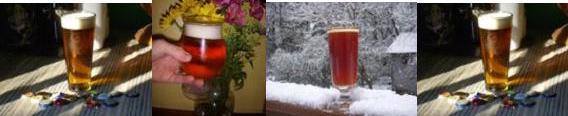


 Gallons = 105


